

Solar module design has changed dramatically over the past few years. What was once a market dominated by full-size square cells and ribbon-based interconnection has evolved into a wide range of cell formats and module architectures, all aimed at increasing power output, improving efficiency, and making better use of available roof space. Today’s market is no longer defined by the conventional full-cell panel alone, but by a mix of architectures including half-cut, multi-busbar, TOPCon, back-contact, and shingled designs.
One of the
most notable developments in this shift is shingled solar panel technology.
Manufacturers such as TCL Solar are now pairing shingled layouts with N-type
TOPCon cells, bringing this architecture
into current-generation premium module ranges.
What are shingled solar panels?
Shingled solar panels are made by cutting a conventional crystalline silicon cell into narrow strips, typically using a laser process, and then arranging those strips so that they overlap like roof shingles. Instead of conventional ribbon soldering between adjacent full cells, shingled modules generally use electrically conductive adhesive (ECA) to create the interconnection between overlapping cell strips. This reduces inactive spacing and helps create a more densely packed module layout.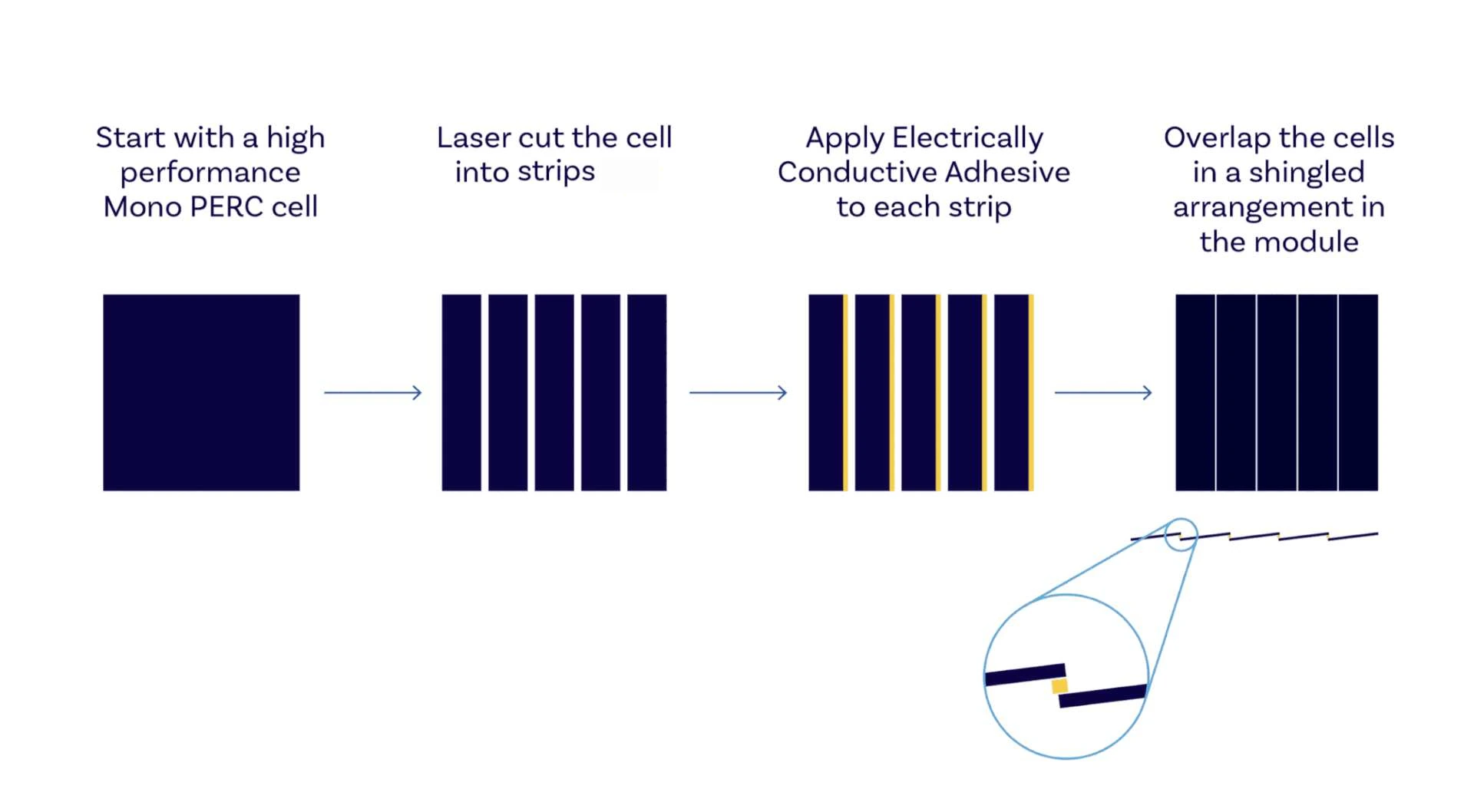
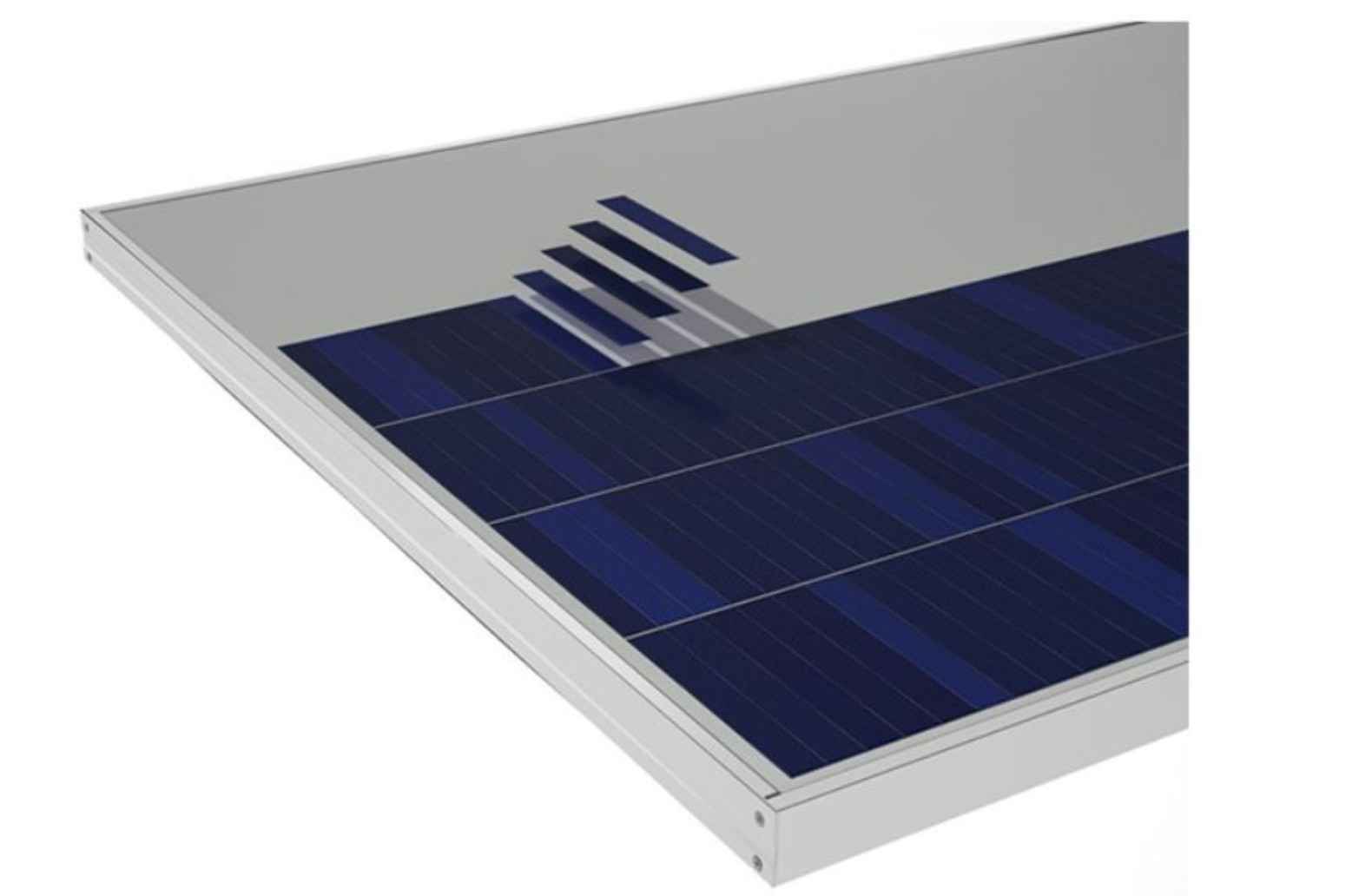
Because the strips overlap, more of the front surface can be used for active power generation. In practical terms, that means more silicon in the same footprint and less inactive area between cells. This is one reason shingled modules have long been associated with higher power density and cleaner aesthetics.
How shingled modules differ from conventional modules
Traditional crystalline silicon modules are usually built from full-size or half-cut cells arranged in rows, with visible spacing between them. These cells are connected using busbars and ribbon-based interconnections. Over time, manufacturers have improved this conventional format with half-cut cells, multi-busbar designs, and wire-based interconnection methods that reduce resistance and improve performance.
Shingled modules take a different approach. Rather than arranging full cells with visible spacing, they use narrow overlapping strips. This changes the structure in several ways:
- visible gaps between cells are reduced or eliminated
- conventional ribbon interconnection is reduced
- each strip carries lower current because the original cell has been divided into smaller sections
-
the module can achieve a higher active-area ratio and a more uniform
appearance
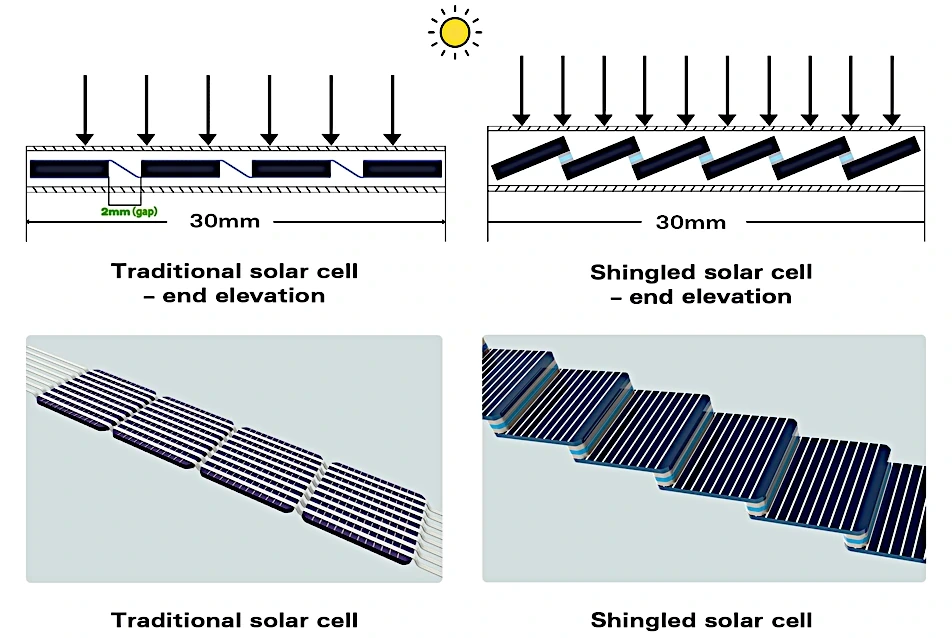
Conventional modules rely on visible interconnections between cells, while shingled modules hide much of this within the overlapping layout. This helps make better use of the panel surface and contributes to a cleaner overall design.
Their electrical layout can also differ. Conventional panels are generally based on series-string arrangements, while shingled modules may use grouped or parallel-style layouts depending on the design. This can help reduce some electrical losses and, in certain architectures, improve resilience to partial shading.
Overall, shingled modules make better use of the panel area by reducing inactive space and helping more of the module contribute to power generation.
Why shingling is getting more attention
A few years ago, shingled modules were often
seen as a specialist or premium format. Today, they are more relevant because
they are increasingly being paired with newer cell technologies such as TOPCon.
That is an important shift: shingling is no longer just associated with
earlier mono PERC packaging approaches, but is now part of the wider move to
extract more value from high-efficiency cell platforms.
Buyers are no longer just comparing cell types. They are also comparing module architecture and interconnection methods. In that context, shingling has become more relevant because it offers a different way to improve power density, module appearance, and potentially real-world performance.
TCL Solar’s shingled TOPCon range
One example of this trend is TCL Solar’s S Class / T5 Pro TOPCon shingled range, which spans residential, commercial, and utility-scale applications. Within that lineup, the S Class combines N-type TOPCon cells with a shingled cell layout.
TCL Solar says its design uses 1/3-cut cell strips connected in an overlapping configuration with electrically conductive adhesive, helping to reduce inactive gaps, improve active-area use, and support higher module output. The range is also positioned around practical benefits commonly associated with shingled design, including improved aesthetics, flexible interconnections, better shade handling, and long-term reliability.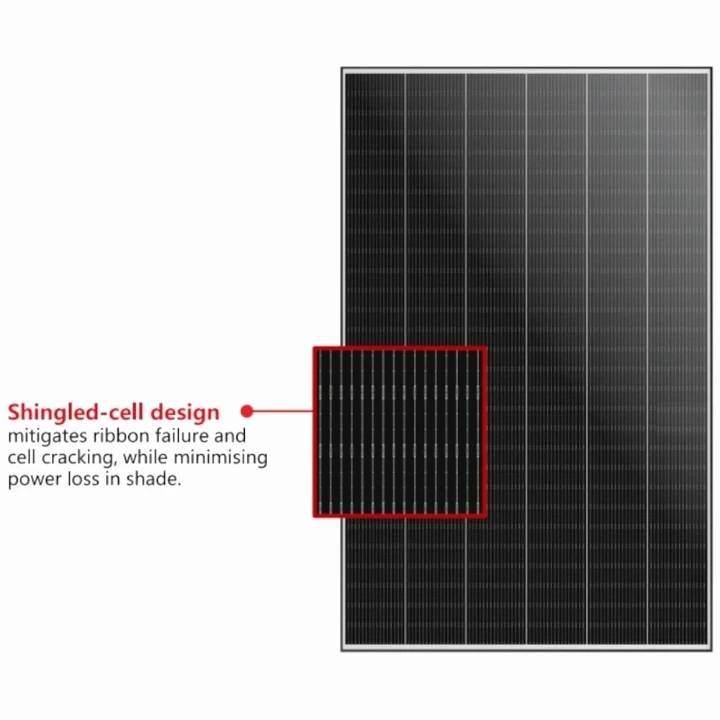
Main advantages of shingled solar panels
Higher
power density
One of the biggest advantages of shingled solar panels is their ability to generate more power from the same panel area. Because the strips overlap and there are fewer gaps between active parts of the module, more of the module surface is working to convert light into electricity. This is especially useful on domestic roofs where space is limited and every panel position matters. That makes shingled modules especially attractive where maximising output from a limited roof area is a priority.
Lower resistive losses
Shingling reduces reliance on conventional ribbon-based interconnection between adjacent strips and reduces the current in each strip. Since resistive power loss scales with current squared, lowering the current in each current path can reduce electrical losses. This is one of the technical reasons shingling can improve module performance.
Better use of the module surface
With conventional modules, some of the front surface is occupied by busbars, interconnect ribbons, and visible spacing between cells. A shingled layout hides much of the interconnection in the overlap region and reduces dead space. The result is a more densely packed module and, in many designs, a cleaner all-black appearance.
Aesthetic advantages
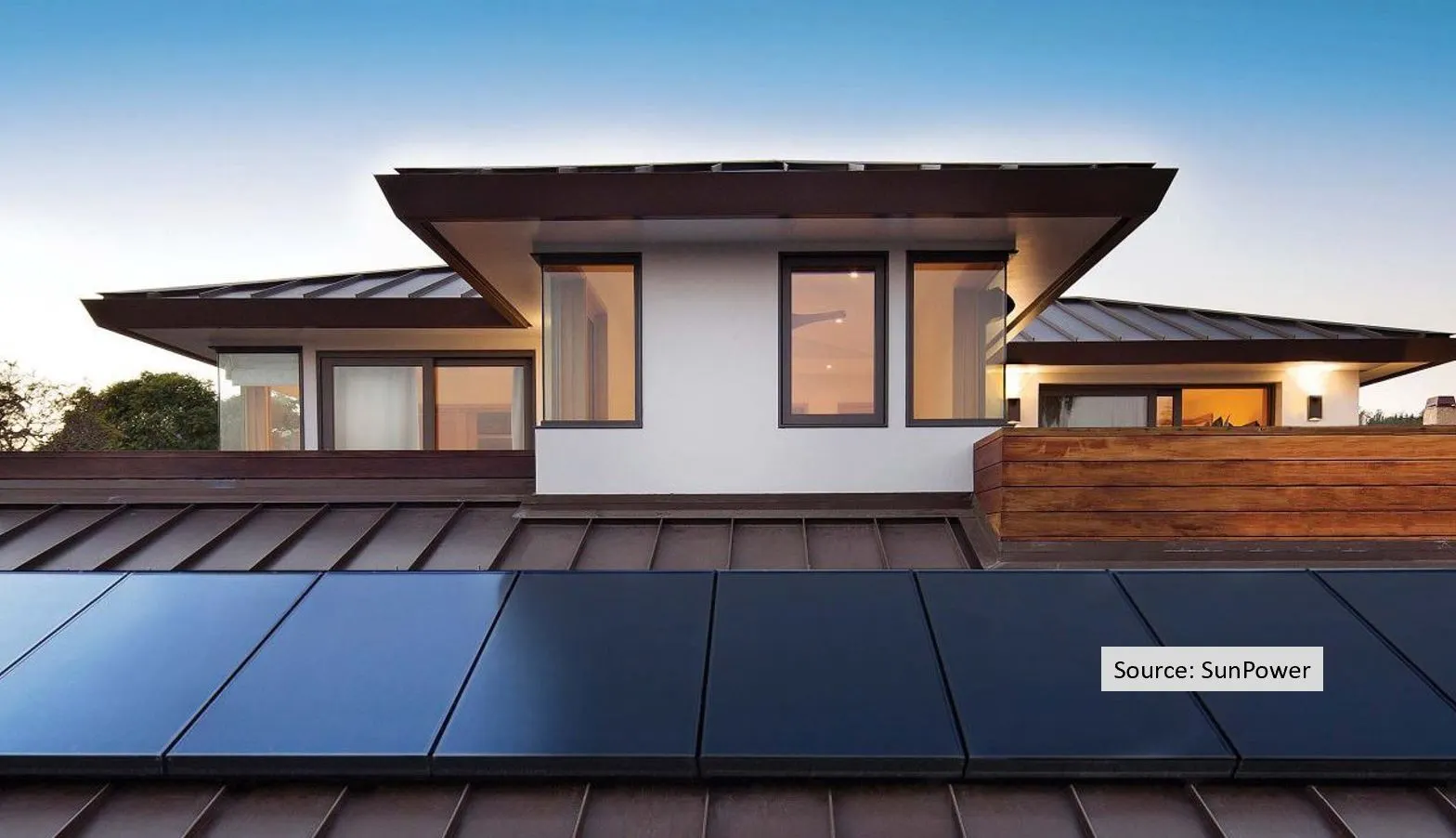
This remains one of the standout benefits of shingled modules. Because there are fewer visible interconnections and less visual interruption between cells, many shingled modules look more like uniform dark glass than traditional solar panels. That makes them attractive for residential rooftops, façades, and other installations where appearance matters. For many projects, that visual advantage is a meaningful buying factor alongside technical performance.
Potential benefits in partial shading
Shingled modules are often promoted for better performance under partial shading, and in some designs that is true. Certain shingled layouts can maintain output more effectively than older conventional architectures by segmenting current paths and reducing the impact of shading on the whole module. TCL’s own technical literature says its shingled-cell design helps manage shade and maintain production over time.
That said, it is better to present this as a design-dependent advantage, not a universal rule. Real shade performance depends on how the module is partitioned, how strings are configured, and the exact shading pattern on site.
Mechanical and thermal benefits
Because shingled modules use narrower strips and flexible conductive adhesives rather than relying solely on conventional soldered ribbon joints, they can distribute mechanical and thermal stress differently from traditional modules. Low-temperature interconnection approaches also reduce thermal stress during manufacturing. This may support long-term durability, although actual reliability still depends on overall module construction quality, materials, and testing standards.
Choosing between shingled and half-cut panels
Half-cut modules have become the mainstream option because they offer strong performance while being easier and more cost-effective to manufacture at scale.
Shingled modules, however, offer a different set of advantages. By cutting cells into narrow overlapping strips, they can make better use of the available module area, reduce visible spacing, and support higher power density with a cleaner appearance. That makes them a strong premium option where layout, aesthetics, and roof-space efficiency matter.
The trade-off is that shingled panels are typically more complex to manufacture than mainstream half-cut panels, which can affect cost and availability. They are also not automatically the right fit for every project, so the decision should be based on factors such as budget, roof layout, site conditions, and the goals of the installation.
Where
shingled modules fit best
Shingled solar panels are often a good fit when:
- roof space is limited
- aesthetics matter
- a high power-per-square-metre design is preferred
- the project benefits from modern premium module architectures
- reducing visible circuitry is important for a cleaner all-black finish
- some partial shading may occur during the day
Shingled solar panels are particularly well
suited to projects where roof space is valuable, appearance is a priority, and
the customer wants a premium module design that makes efficient use of the
available area.
Shingled Solar Panels and TCL Solar: FAQs
Shingled solar panels are made by cutting conventional solar cells into narrow strips and overlapping them like roof shingles. This reduces inactive gaps between cells and helps create a more densely packed module layout.
Not in every case. Half-cut panels remain the mainstream choice because they are widely available and cost-effective. Shingled panels, however, can offer advantages in power density, appearance, and module layout, making them a strong premium option for some projects.
TCL Solar’s shingled TOPCon panels combine N-type TOPCon cells with a shingled cell layout, helping to improve active-area use, support higher power density, and deliver a cleaner panel appearance.
TCL Solar’s shingled panels use 1/3-cut solar cells because smaller cell strips can help reduce internal current, lower resistive losses, and make better use of the available module area. In a shingled layout, those strips are overlapped and connected to support higher power density, a cleaner appearance, and strong real-world performance.
In some designs, they can. Certain shingled layouts may reduce the impact of partial shading, but performance still depends on the module design, system layout, and the exact shading pattern on site.
Alternergy is a distributor of TCL solar panels in the UK
TCL Solar is the solar division of the wider TCL technology group and is presented by the company as a BloombergNEF Tier 1 PV module manufacturer. Its portfolio includes TOPCon half-cut, TOPCon shingled, and back-contact panel ranges for residential, commercial, and utility-scale projects. TCL’s broader solar business also has links to Maxeon and SunPower through related group companies and partnerships.
Conclusion
Shingled solar panels are no longer just a niche part of PV module design. They remain a relevant way to improve active-area use, reduce some interconnection losses, and deliver a more uniform appearance, especially as shingled designs are paired with newer cell platforms such as TOPCon.
At the same time, shingled modules are not automatically better in every respect, and they are not replacing all other formats. Manufacturing, cost, and scaling challenges still help explain why they remain a smaller part of the wider market.
Put simply, shingled modules are a strong premium option where power density, appearance, and refined module design matter most, especially on rooftops where space and aesthetics are both important.
Interested in TCL Solar panels? Alternergy supplies the TCL Solar range, including shingled panels, and can help you choose the right option for your project. Contact our team to discuss your requirements.