

Back-contact solar panels occupy a distinct position in the photovoltaic market because they address one of the most basic constraints in silicon solar cells: front-side metallisation losses. By moving the electrical contacts to the back of the cell, they reduce front-side shading, improve efficiency and power density, and create a cleaner appearance. This can be especially useful where space is limited, but it also makes the technology more complex and expensive to produce.
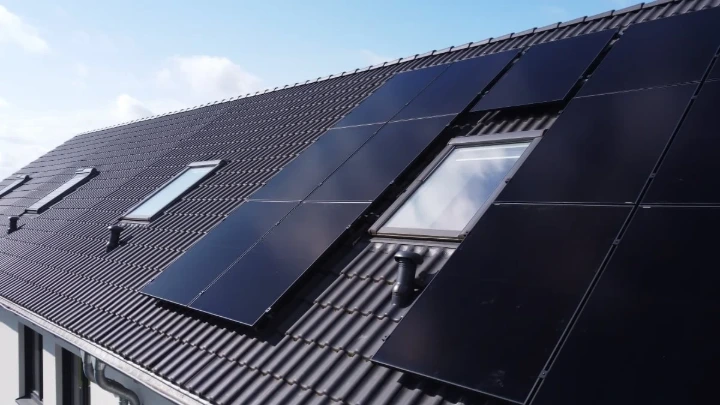
What is a back-contact solar panel?
A back-contact solar panel is a photovoltaic module made with silicon solar cells in which all or most electrical contacts are placed on the rear side instead of the front.
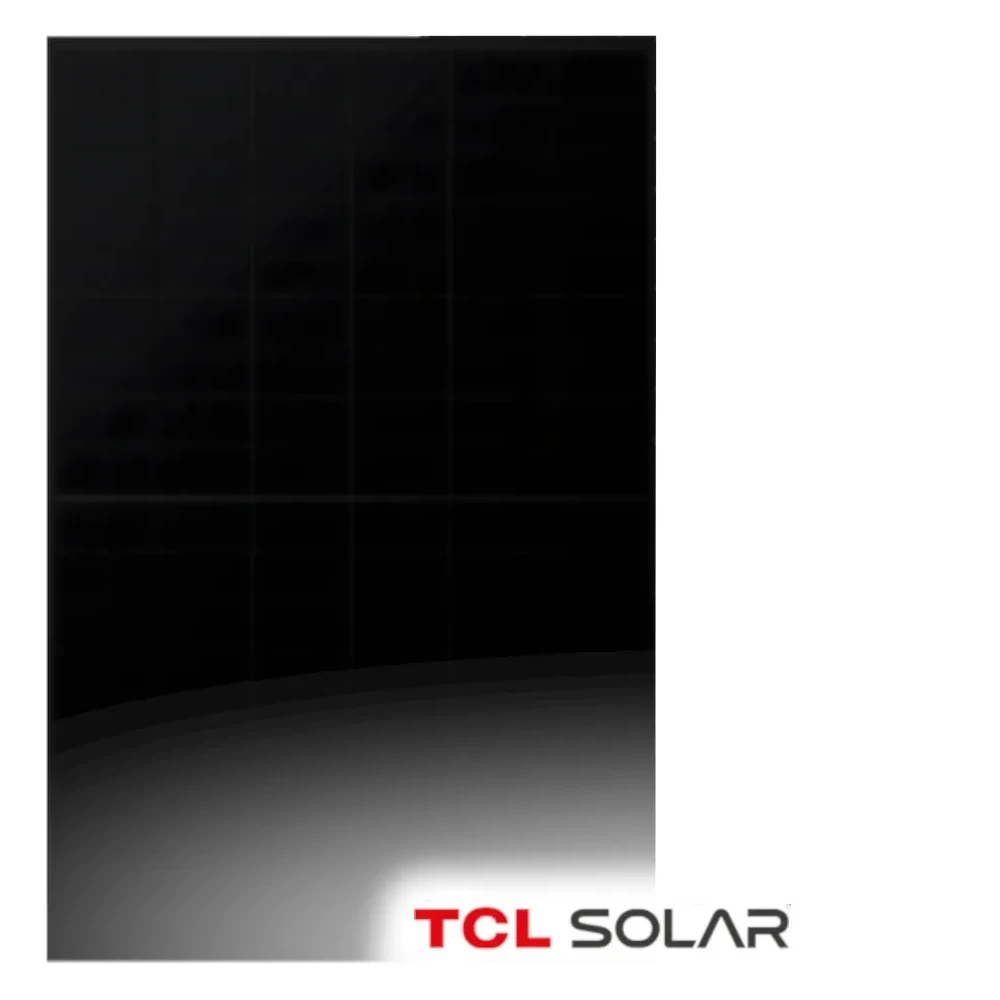
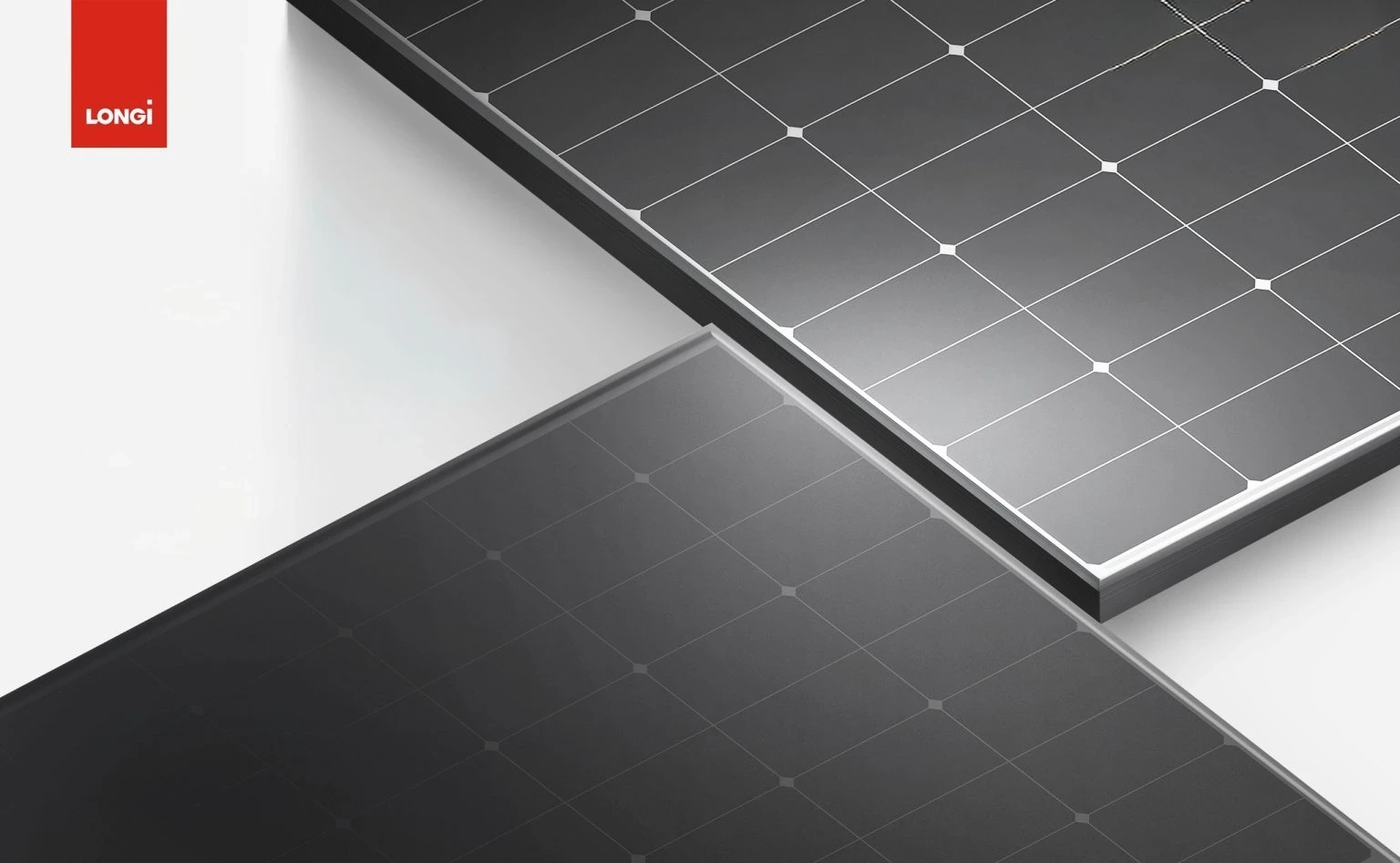
By placing the electrical contacts on the back of the cell, back-contact designs reduce front-side shading and leave more of the illuminated surface available for light absorption. The result can be higher efficiency and a darker, cleaner, more uniform all-black appearance, because there are no visible silver busbars or fingers on the front.
The best-known version of this architecture is the interdigitated back contact (IBC) cell, though other back-contact approaches also exist, including newer hybrid back-contact designs.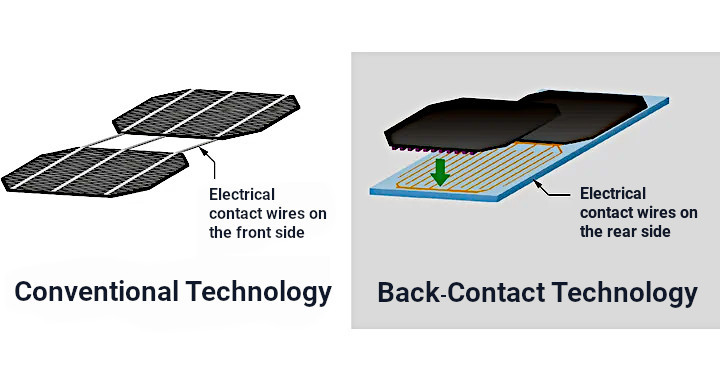
Why back-contact design matters
The importance of back-contact architecture comes from a basic physical limitation in conventional solar cells: the same front metal grid that collects current also blocks light.
That trade-off has always been part of front-contact cell design. A lighter grid reduces shading but increases resistive losses, while a heavier grid improves current collection but blocks more light.
Back-contact architecture changes the location of that compromise by removing most or all front-side metallisation from the illuminated front surface. This can improve photocurrent generation and support higher module efficiency, especially where module area is limited and higher power density has greater practical value.
How back-contact design improves efficiency
This can support several performance gains:
- Lower front-surface reflection
- Better front-surface passivation
- More uniform light absorption
- Lower electrical losses on the front side
When designed and manufactured well, back-contact cells can generate more current and support higher open-circuit voltage and fill factor. This helps explain why the architecture can achieve very high efficiencies. In practical terms, that means higher module efficiency and more installed capacity within the same footprint.
The most important back-contact architecture: IBC
The interdigitated back-contact, or IBC, cell is the best-known and most technically developed back-contact cell architecture. It was explored in early research at Stanford University and later commercialised by SunPower through high-efficiency IBC designs.
In an IBC cell, both positive and negative contacts are placed on the back of the cell in an alternating interdigitated pattern, meaning they are arranged like interlocking fingers on the rear side. This keeps the front of the cell almost completely free of metal lines, allowing more of the surface to be used for light absorption and passivation.
The advantage is clear, but so is the trade-off. Because the electrical contacts are all on the back, IBC cells depend more on high-quality materials, precise manufacturing, and careful rear-side design.
Charge carriers generated near the front still have to be collected efficiently through the rear, so losses must be tightly controlled. That is why IBC should be understood as a demanding engineering architecture rather than simply a premium layout choice.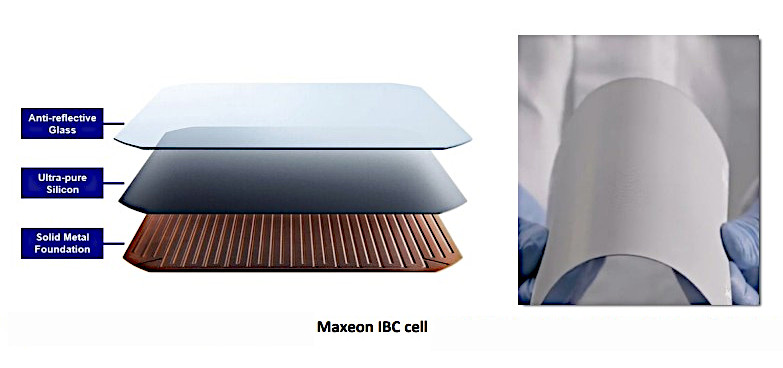 Other back-contact approaches also exist, including newer proprietary variants such as LONGi’s HPBC, which stands for Hybrid Passivated Back Contact, but they are not covered in detail in this blog.
More detailed information on back-contact technology and related trends can be found in the latest technical resources from LONGi and also TCL Solar.
How back-contact panels compare with conventional, shingled, and TOPCon panels
Back-contact vs conventional panels
Compared with conventional front-contact monocrystalline panels, back-contact modules are generally positioned as higher-efficiency, higher-power-density products. Conventional panels remain stronger on affordability, manufacturing maturity, and broad availability, so they can still be the better choice where cost matters more than maximum output per square metre.
Back-contact vs shingled panels
Back-contact and shingled panels improve solar modules in different ways. Shingled designs mainly improve module layout by overlapping cell strips to reduce inactive spacing, while back-contact designs change the cell architecture itself by moving the electrical contacts to the rear. Both can offer a cleaner look, but back-contact panels generally lead in top-end efficiency and power density, while shingled panels often offer a more moderate cost-performance balance.
Back-contact vs TOPCon panels
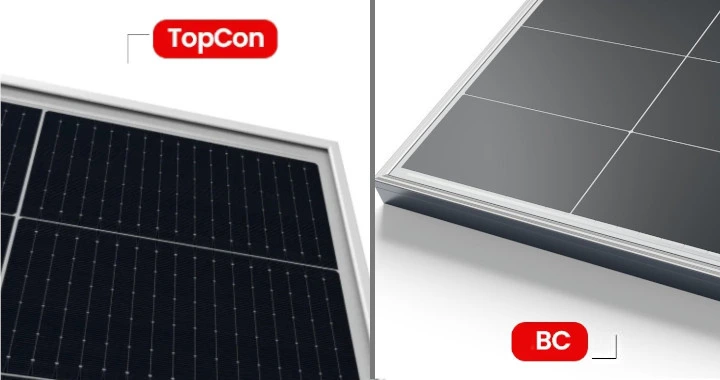
A more relevant modern comparison is between back-contact and TOPCon, because both sit in the high-efficiency segment of the market. TOPCon improves performance through a tunnel oxide and passivated contact structure, while back-contact takes a different route by moving the contact structure to the rear.
In practical terms, TOPCon is easier to industrialise at mass-market scale, while back-contact remains more premium and more focused on maximum watts per square metre. TOPCon may be the better fit where cost-efficiency and scale dominate, while back-contact may be more attractive where roof space is constrained and each extra watt is valuable.
Back-contact panels are often marketed as stronger under partial shading, but the advantage depends on the shading pattern and may narrow under heavier or more consistent shading.
Where back-contact panels make the most sense
Back-contact panels make the most sense where limited space makes higher efficiency more valuable.
Residential rooftops
Residential roofs are often limited by layout, obstructions, setbacks, and visibility. In these situations, higher power density can make better use of the available roof area. The cleaner appearance can also matter on highly visible homes.
Commercial rooftops
Commercial roofs may be limited by mechanical equipment, access paths, structural conditions, or layout restrictions. In these cases, more watts per square metre can help increase output within a limited area. Back-contact panels can also have a favourable temperature coefficient, which means power output falls less as module temperatures increase. This can be especially important on commercial roofs in hot climates.
Utility-scale projects
The case is less clear in utility-scale projects, where cost per watt, supply-chain scale, and overall project economics often matter most. Where land is abundant and space is not a major constraint, the premium for back-contact technology may be harder to justify. That does not rule out back-contact modules for utility-scale use, but the case for them usually depends more on project economics than on appearance or premium positioning. In some cases, stronger low-light performance, lower degradation, and a favourable temperature coefficient can also improve long-term energy yield. If the price gap narrows, those factors may strengthen the case for back-contact technology even in utility-scale projects.
The trade-offs behind the performance
Back-contact architecture offers clear advantages, but it also introduces technical challenges.
More demanding rear-side design
Because all electrical contacts are placed on the rear, the cell becomes more complex to design and manufacture. Some charge carriers generated near the front must travel farther before collection, while the rear side must handle precise contact patterning, electrical isolation, and metallisation.
Because positive and negative contacts sit close together on the same side, losses and short-circuit risk must be tightly controlled. That makes performance more dependent on high-quality materials, strong passivation, careful rear-side design, and precise manufacturing.
Higher manufacturing cost
This is the most visible commercial drawback. More complex processing, tighter tolerances, and potentially lower yields all contribute to a higher-cost product.
At the same time, these more advanced design and manufacturing requirements are also what enable the higher efficiency and power density that make back-contact technology attractive in the first place.
Reliability and module-level considerations
Initial efficiency is only part of the value of a premium module. Long-term reliability matters just as much, especially in modules that rely on more complex rear-side structures.
Important considerations include:
- Rear-side durability: whether the rear-side contacts remain stable over time and whether the interconnection materials stay durable over the long term
- Thermal stability: whether the module can withstand repeated heating and cooling
- Mechanical durability: how the module responds to mechanical loading, including bending, bowing, and the risk of micro-cracks
- System-level behaviour: how the module performs under mismatch, partial shading, and hot-spot stress
- Material stability: whether the protective and sealing layers remain stable over time
- Bifacial performance: some back-contact designs may have lower bifaciality because the rear side is more occupied by the contact structure, which can reduce rear-side energy gain in bifacial-friendly installations
At the same time, back-contact modules are also associated with strong warranties and lower degradation in some premium examples. The balanced conclusion is that reliability depends heavily on execution quality, so back-contact modules should be judged as complete products, not only by the elegance of the cell architecture.
What to evaluate when considering back-contact panels
A higher-efficiency module does not determine real-world value by itself. System performance also depends on temperature coefficient, irradiance conditions, orientation and tilt, shading profile, inverter choice, installation quality, and degradation rate over time.
In practice, one of the main advantages of back-contact modules is that they can provide more power from the same available installation space. In some projects, higher power density can also reduce balance-of-system requirements by lowering the number of modules needed to reach the target output.
When evaluating back-contact modules, the key question is not simply whether the technology is good. It is whether a specific product is well suited to the project.
Important factors include:
Design and performance factors
- module efficiency
- wattage and power density
- temperature coefficient
- degradation rate
- shading behaviour
Commercial and product factors
- product warranty
- performance warranty
- manufacturer track record and bankability
- overall product quality and consistency
A premium module delivers full value only when it is matched with sound system design and good installation practice.
Back-Contact Solar Panels: FAQs
A back-contact solar panel is a photovoltaic module made with cells that place all or most electrical contacts on the rear side instead of the front. This reduces front-side shading and can improve efficiency and appearance.
Because the electrical contacts are moved to the rear, more of the front surface is available to absorb sunlight. That can reduce shading losses and support higher power density.
Not always. IBC is the best-known back-contact cell architecture, but it is not the only one. Other back-contact approaches also exist, including newer proprietary variants such as LONGi’s HPBC. In simple terms, IBC is one type of back-contact design rather than a name for the whole category.
They are often most useful where space is limited and higher efficiency has practical value, such as residential rooftops, commercial roofs with layout constraints, and some premium applications.
Not in every case. Back-contact panels can offer higher power density and a cleaner appearance, while TOPCon is often easier to scale and may be more attractive where cost-efficiency is the priority.
Usually, yes. Their more complex design and manufacturing process can make them more expensive than mainstream front-contact alternatives.
They can, but the case is less straightforward. In utility-scale projects, the value often depends on project economics, available land, and whether higher efficiency justifies the premium.
In the UK, Alternergy supplies back-contact panels from LONGi and TCL Solar. Contact our team for more information or support with product selection.
Final Thoughts
Back-contact solar panels matter because they address a basic limitation in conventional cell design: front-side metallisation losses. By moving electrical contacts to the rear, they reduce shading on the illuminated surface, improve light capture, and support higher power density.
That gives them clear value where space is constrained and higher efficiency has practical value. It does not make them the best choice for every project, since manufacturing complexity and cost remain important considerations.
The most accurate way to view back-contact technology is as a distinct solar cell design that can improve light capture, increase usable power from a given area, and deliver a cleaner, more aesthetically pleasing panel layout, especially where efficient use of available space matters most.
Looking for back-contact solar panels? Alternergy supplies back-contact panels from LONGi and TCL Solar. Contact our team to discuss your requirements.