
DC Isolation in UK Solar: Installer Guide to Safety & Compliance
➛ Practical rule of thumb: If the inverter includes a built-in DC isolator, prefer locating isolation at the inverter and avoid additional external rooftop DC isolators, unless the manufacturer, client spec or site policy explicitly requires them.
Always size and mark per BS EN/IEC 60947-3 and select DC-PV1/DC-PV2 as appropriate.
IMO DC Isolators UK: True DC Safety for Solar PV Systems
Among UK PV isolator brands, IMO is widely trusted by installers and wholesalers. IMO stands out because it combines purpose-built PV design, proven compliance, and real-world durability.
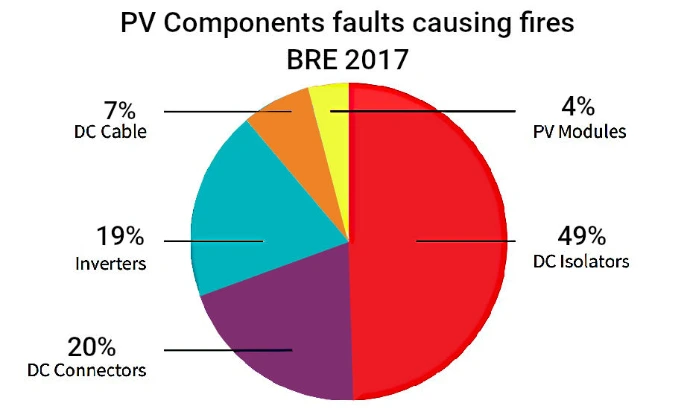
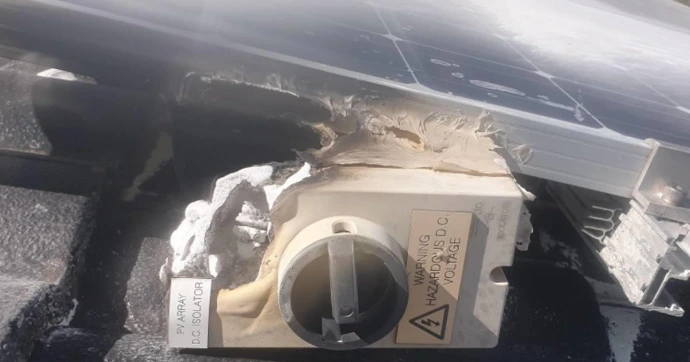
Poorly made or incorrectly installed isolators often fail under load or let in moisture, which leads to the majority of PV fire incidents. IMO has built its reputation by eliminating those weaknesses.
Why installers choose IMO
- “True DC” design & safety: patented design "snap-action", very fast make/break (typically <3–5 ms) for reliable arc suppression.
- Reliability & durability: UV-resistant materials and IP66/IP67 enclosures for harsh outdoor conditions.
- Proven trust: selected by leading inverter manufacturers and installers worldwide.
- Certified compliance: IEC 60947-3 and EN 60364-7-712.
- Range & flexibility: IMO offers a wide range of DC isolators for the UK residential and light commercial markets.
Safety depends on specification & installation
- Correct PV category: DC-PV1 for single strings; DC-PV2 for paralleled strings (never DC-PV0 for on-load).
- Verified rating: BS EN/IEC 60947-3 marking, voltage/current above calculated maxima.
- Fast snap-action: essential for arc suppression (a defining IMO feature).
- Proper installation: IP66 glands, correct torque, drainage orientation, water-ingress prevention, lockable handle, clear labelling.
Choosing the Right IMO DC Isolator
Match the isolator rating to the expected string current and application. IMO’s flexibility means a safe, compliant solution for everything from small residential to multi-string commercial PV systems.
IMO DC Isolator Options:
- Current ratings:
- 16 A ➛ Ideal for single-string residential systems (Isc + 125% < 16 A)
- 25 A ➛ Suitable for hybrid/off-grid inverters with ~25 A inputs; balances safety and cost-effectiveness
- 32 A ➛ Designed for parallel string applications where combined current exceeds 16 A but remains under 32 A
- Pole configurations: 2-pole (single string), 4-pole (two strings, most common in UK), 6–8 pole (larger multi-string installs).
- Mounting options: Enclosed IP66/IP67 units for outdoor use, or panel/base-mount versions for integration in cabinets and string boxes.
These ratings are the most common in UK solar installations and provide installers with confidence in both performance and compliance.
Get Special Trade Pricing on IMO DC Isolators
Account customers receive preferential rates on IMO “True DC” isolators.
➛ Explore DC Isolators
➛ Explore AC Isolators
➛ Explore 
Need Support? We are here to help. Contact Us
➛ Practical rule of thumb: If the inverter includes a built-in DC isolator, prefer locating isolation at the inverter and avoid additional external rooftop DC isolators, unless the manufacturer, client spec or site policy explicitly requires them.
Always size and mark per BS EN/IEC 60947-3 and select DC-PV1/DC-PV2 as appropriate.
IMO DC Isolators UK: True DC Safety for Solar PV Systems
Among UK PV isolator brands, IMO is widely trusted by installers and wholesalers. IMO stands out because it combines purpose-built PV design, proven compliance, and real-world durability.
Poorly made or incorrectly installed isolators often fail under load or let in moisture, which leads to the majority of PV fire incidents. IMO has built its reputation by eliminating those weaknesses.
Why installers choose IMO
- “True DC” design & safety: patented design "snap-action", very fast make/break (typically <3–5 ms) for reliable arc suppression.
- Reliability & durability: UV-resistant materials and IP66/IP67 enclosures for harsh outdoor conditions.
- Proven trust: selected by leading inverter manufacturers and installers worldwide.
- Certified compliance: IEC 60947-3 and EN 60364-7-712.
- Range & flexibility: IMO offers a wide range of DC isolators for the UK residential and light commercial markets.
Safety depends on specification & installation
- Correct PV category: DC-PV1 for single strings; DC-PV2 for paralleled strings (never DC-PV0 for on-load).
- Verified rating: BS EN/IEC 60947-3 marking, voltage/current above calculated maxima.
- Fast snap-action: essential for arc suppression (a defining IMO feature).
- Proper installation: IP66 glands, correct torque, drainage orientation, water-ingress prevention, lockable handle, clear labelling.
Choosing the Right IMO DC Isolator
Match the isolator rating to the expected string current and application. IMO’s flexibility means a safe, compliant solution for everything from small residential to multi-string commercial PV systems.
IMO DC Isolator Options:
- Current ratings:
- 16 A ➛ Ideal for single-string residential systems (Isc + 125% < 16 A)
- 25 A ➛ Suitable for hybrid/off-grid inverters with ~25 A inputs; balances safety and cost-effectiveness
- 32 A ➛ Designed for parallel string applications where combined current exceeds 16 A but remains under 32 A
- Pole configurations: 2-pole (single string), 4-pole (two strings, most common in UK), 6–8 pole (larger multi-string installs).
- Mounting options: Enclosed IP66/IP67 units for outdoor use, or panel/base-mount versions for integration in cabinets and string boxes.
These ratings are the most common in UK solar installations and provide installers with confidence in both performance and compliance.
Get Special Trade Pricing on IMO DC Isolators
Account customers receive preferential rates on IMO “True DC” isolators.
➛ Explore DC Isolators
➛ Explore AC Isolators
➛ Explore
Need Support? We are here to help. Contact Us